Home Blog

Richie Evans: The King of Modified Racing

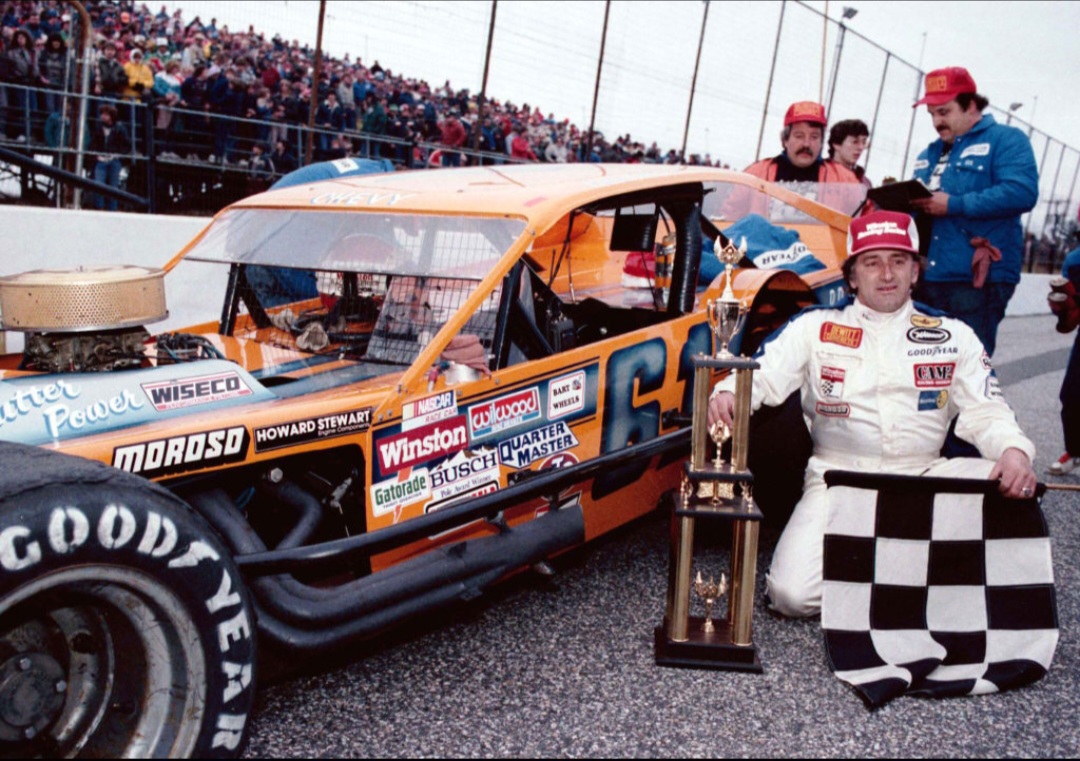
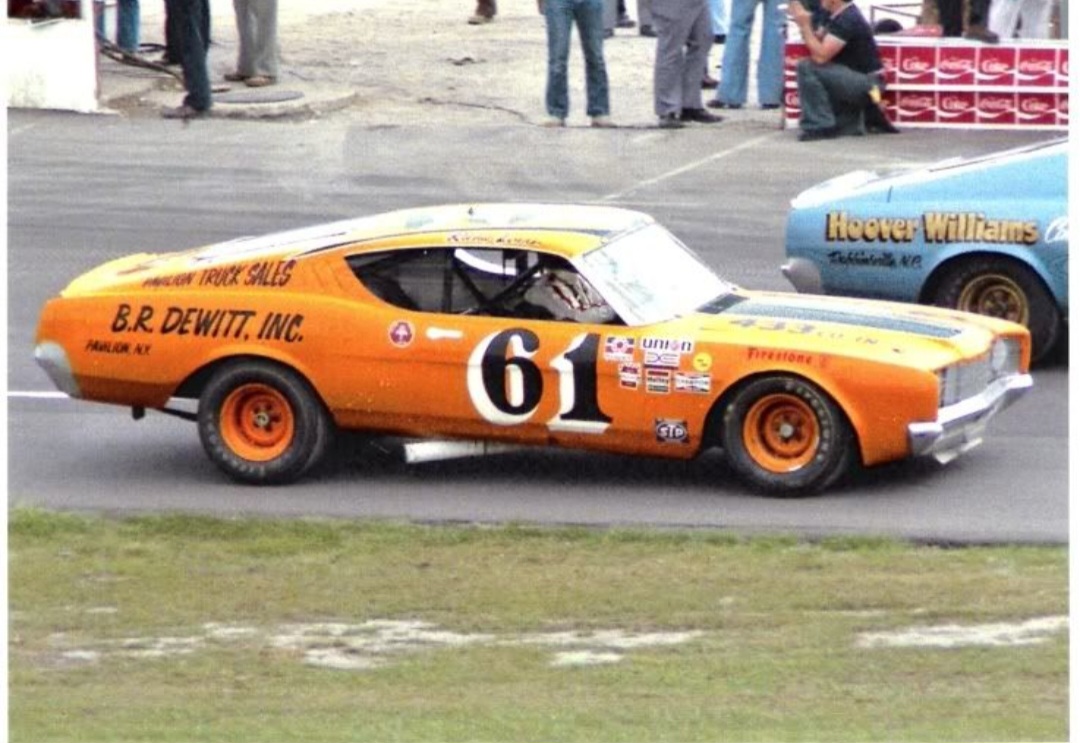
“Richie” Evans (July 23, 1941 – October 24, 1985) remains one of the most celebrated names in American short-track racing, especially in the NASCAR Modified ranks. He dominated the sport through grit, mechanical skill, and relentless consistency — earning him the nickname “The Rapid Roman.” —Early Life and Entry into RacingEvans was born in Westernville, New York, and raised on a farm. At age 16, he left the family farm to work as a mechanic at a local garage — a decision that would foreshadow his twin passions for building and driving race cars. His first forays into motorsport were modest. After dabbling in street racing and drag racing, he was encouraged to build a “hobby stock” car to run at the nearby Utica-Rome Speedway in Vernon, New York. He built a 1954 Ford, dubbed PT-109 (a nod to John F. Kennedy’s torpedo boat) and began racing it around 1962. By 1965, Evans moved up into the Modified division, claiming his first feature victory in the season’s final race at Utica-Rome. —Rise in the Modified Ranks & Early SuccessesThrough the late 1960s, Evans built both his reputation and skill set, racing at various regional tracks across New York and beyond. He often competed not only in NASCAR-sanctioned Modified events but also in independent (outlaw) local shows, which sometimes put him at odds with NASCAR’s policies of the era. At one point, NASCAR fined Evans for competing in non-sanctioned events. Evans challenged this by invoking New York’s “Right to Work” statutes. After mounting a legal fight, he won reinstatement and the ability to compete in both NASCAR and independent events. In 1970 and 1971, he claimed track championships at Fulton Speedway, and again in 1974. —National Prominence & Championship ReignEvans’ first national moment in Modified racing came in 1973, when he teamed up with car owner Gene DeWitt and clinched his first NASCAR National Modified Championship. During the mid-1970s, his career intersected with that of fellow Rome, NY, driver Jerry Cook. Cook had won consecutive championships, and Evans often positioned himself as the challenger. From 1974 through 1977, Evans sometimes prioritized big-money individual races rather than chasing full points campaigns, giving Cook the edge in consistency. Evans reclaimed the top spot in 1978, and that year marked the beginning of a historic streak. From 1978 through 1985, he won eight consecutive national Modified championships — a feat unmatched in NASCAR history. In total, Evans won nine NASCAR National Modified Division titles (1973, then 1978–1985). In the inaugural season of what is now known as the Whelen Modified Tour (1985), Evans dominated: 28 starts, 12 wins, 4 poles — and he swept all four events at Thompson, Connecticut. —Performance, Records & Signature RacesEvans was not just consistent — he was often overwhelming. Some of his seasons are legendary by any measure:In 1979, he started some 60 NASCAR Modified events, won 37, and recorded 54 Top-5 finishes. In 1983, he ran 68 events, won 31, and added 57 Top-5 finishes. Beyond points titles, Evans racked up success in marquee events across the Modified circuit. He won the prestigious Race of Champions three times (at Trenton and Pocono). He also scored victories in events like the Dogwood Classic at Martinsville, the Thompson 300, Stafford’s Spring Sizzler, the Islip All-Star 300, and feature wins at Daytona’s Modified events. At regional short tracks, his dominance was widespread: over 30 track championships across 11 tracks in 4 states. Some of the tracks where he won multiple titles include Thompson (CT), Stafford (CT), Utica-Rome (NY), Holland, Fulton, Spencer / Williamson, Shangri-La, Oswego, Chemung, and others. His signature orange #61 machine became legendary. He was frequently voted NASCAR Modified “Most Popular Driver” 9 times. —Tragic End & Posthumous HonorsIn October 1985, Evans arrived at Martinsville Speedway for what would be the season’s final event. He had already clinched the 1985 NASCAR Modified title at Thompson earlier in the year, securing his eighth straight championship and his ninth overall. During practice on October 24, Evans’ #61 car crashed head-on into the concrete barrier on the backstretch between turns 3 and 4. He suffered fatal injuries and was declared dead at age 44. Theories about the crash vary; some suggest a stuck throttle, though conclusive evidence was never established. Despite his tragic death, Evans was awarded the 1985 Modified Tour championship posthumously — the first year under the format that would become the modern tour. In the years following his death, Evans received numerous honors:Inducted into the International Motorsports Hall of Fame (1996) Chosen as one of NASCAR’s 50 Greatest Drivers in 1998 Named to the NASCAR Hall of Fame (inducted 2012) — notably the first inductee whose career was almost entirely in the Modified division rather than the Cup series. Ranked as the #1 all-time Modified driver in the 2003 NASCAR Modified Top 10 poll. His accomplishments—nine national titles, hundreds of wins, and a reputation for both technical aptitude and fierce competitiveness—are still considered among the greatest in motorsports. —Legacy & InfluenceRichie Evans’ legacy in the world of short-track and Modified racing is profound:His record of eight consecutive national championships remains unrivaled in NASCAR. Many drivers today cite Evans as a standard of excellence in mechanical skill, racecraft, and professionalism. Because he built and maintained his own cars, he demonstrated that driving talent and mechanical mastery could go hand in hand — a trait admired in grassroots racing. Numerous memorial events and tribute races have been held in his name, including the Richie Evans Memorial 100 at New Smyrna and local short tracks. His fame helped elevate the status of Modified racing and inspired generations of drivers to pursue excellence on the short-track circuit. irit of American grassroots motorsport: working with his hands, racing week in and week out, and outlasting the competition through consistency, determination, and unrelenting skill.
The Fast Lane of North America: Reviewing the Best American and Canadian Racing Drivers

Introduction: Why Racing Matters in North America
Motorsport isn’t just a sport in North America—it’s a culture, a way of life, and for many, a family tradition. From the thunder of stock cars roaring around Daytona to the sleek precision of IndyCars flying through Indianapolis, the continent has produced some of the world’s most fearless, passionate, and skilled drivers.
Canada and the United States share more than a border; they share a racing heritage that has shaped legends and inspired generations of fans. NASCAR, IndyCar, Formula 1, IMSA, and grassroots dirt tracks all serve as proving grounds for drivers chasing glory. Each series demands different skills, mental toughness, and adaptability.
At Honestracer.com, our mission is simple: to review, celebrate, and critique North America’s racing drivers with honesty. No hype, no PR polish—just an honest look at who’s great, who’s overrated, and who might be the future of racing. This article sets the stage, introducing you to the legends, today’s stars, and the cultural heartbeat of racing in America and Canada.

The Legacy of American Racing Drivers
American racing history is decorated with names that transcend the sport. These legends built the foundation for today’s racing scene, where young drivers still look to them for inspiration.
Mario Andretti – Arguably America’s most complete driver, Andretti won in Formula 1, IndyCar, NASCAR, and even sports cars. His versatility remains unmatched.
A.J. Foyt – A giant of American motorsport, Foyt claimed four Indianapolis 500 victories and left his mark on almost every series he touched. Tough, fearless, and relentless, he embodied the grit of American racing.
Dale Earnhardt Sr. – “The Intimidator” wasn’t just a NASCAR star—he was the NASCAR star. His aggressive style, unmatched racecraft, and seven championships made him a hero to millions.
These drivers weren’t only winners—they were larger-than-life personalities who defined eras. They shaped the very idea of what it means to be a racing driver in North America: brave, relentless, and unapologetically competitive.

Modern American Stars: Who’s Dominating Today?
While legends paved the road, today’s American drivers are carrying the torch into new eras of racing.
NASCAR Powerhouses
Kyle Larson – A true talent across disciplines, Larson can win in NASCAR, sprint cars, and dirt tracks. His adaptability makes him one of the most complete drivers in the modern NASCAR field.
Denny Hamlin – The veteran who somehow still hasn’t won a championship, Hamlin’s consistency and racecraft make him one of NASCAR’s most respected competitors.
Joey Logano – With multiple championships, Logano has evolved from the “kid with potential” into a proven star and leader in the garage.
IndyCar Heroes
Josef Newgarden – Smooth, smart, and calculated, Newgarden is arguably the best American open-wheel driver of his generation, with multiple championships to his name.
Colton Herta – Young, fearless, and aggressive, Herta represents the future of American IndyCar racing. Many believe he could even make the jump to Formula 1.
Alexander Rossi – From his stunning Indy 500 win as a rookie to his consistent presence as a contender, Rossi brings a mix of intelligence and raw pace to IndyCar.
These modern stars prove that the American racing scene is alive, competitive, and ready to produce the next legends.

Canadian Racing Heroes
Canadian racing has its own proud legacy. While smaller in scale compared to the U.S., Canada has produced drivers who’ve made massive impacts globally.
Gilles Villeneuve – Still considered a national hero, Villeneuve was fearless and spectacular in Formula 1. His driving for Ferrari in the late 1970s cemented his reputation as one of the sport’s most exciting figures.
Jacques Villeneuve – Gilles’ son carried the family torch, winning the 1997 Formula 1 World Championship and the 1995 Indianapolis 500. He remains Canada’s most decorated racing driver.
Paul Tracy – Known as “The Thrill from West Hill,” Tracy’s aggressive style and CART/IndyCar success made him one of Canada’s most colorful and controversial drivers.
Modern Canadian Drivers
Lance Stroll (Formula 1) – Often criticized due to his family’s wealth, Stroll has proven he can perform at the top level, scoring podiums and battling some of the world’s best.
Robert Wickens (IMSA) – After a devastating IndyCar crash left him partially paralyzed, Wickens’ return to competitive racing in touring cars is one of the most inspiring comeback stories in motorsport.
Devlin DeFrancesco (IndyCar) – A young driver looking to make his mark, DeFrancesco is part of the new wave of Canadians trying to break into the big leagues.
Canadian racing culture is about resilience, passion, and proving oneself on the world stage.

Comparing American and Canadian Racing Cultures
Although they share a continent, the U.S. and Canada approach racing differently.
American Racing is dominated by NASCAR and IndyCar, massive fan bases, and billion-dollar sponsorships. Racing in America feels like an entertainment spectacle as much as a sport.
Canadian Racing leans toward international influence, with Formula 1’s Canadian Grand Prix in Montreal being the nation’s crown jewel. Canadian fans also follow European racing closely, giving their motorsport culture a more global flavor.
Where Americans celebrate oval racing and raw horsepower, Canadians often rally around technical circuits and international prestige. Together, they represent two sides of the same coin: passion for speed and competition.

Rising Talents & The Future of North American Racing
The future of North American racing is bright. A new generation of drivers is emerging from karting, sim racing, and grassroots tracks.
In the U.S., drivers like Ty Gibbs in NASCAR and Kyle Kirkwood in IndyCar are turning heads. In Canada, young prospects are pushing to follow in the footsteps of the Villeneuve name. Sim racing and eSports have also opened doors for new talent, giving young racers an unconventional path into professional motorsport.
The next decade could see an even tighter connection between American and Canadian drivers, especially as global racing continues to mix disciplines and blur boundaries.

Conclusion: The Honest Road Ahead
Racing in North America is a living, breathing story of speed, courage, and ambition. From Earnhardt and Villeneuve to Larson and Stroll, drivers continue to push the limits of what’s possible.
At Honestracer.com, our goal is to cover these drivers with honesty—to celebrate their victories, critique their mistakes, and give fans a clear picture of who they really are behind the wheel.
This is just the beginning. In future reviews, we’ll dive deeper into individual drivers, their careers, strengths, weaknesses, and the qualities that make them worth following. Buckle up—the journey has just begun.